rspp

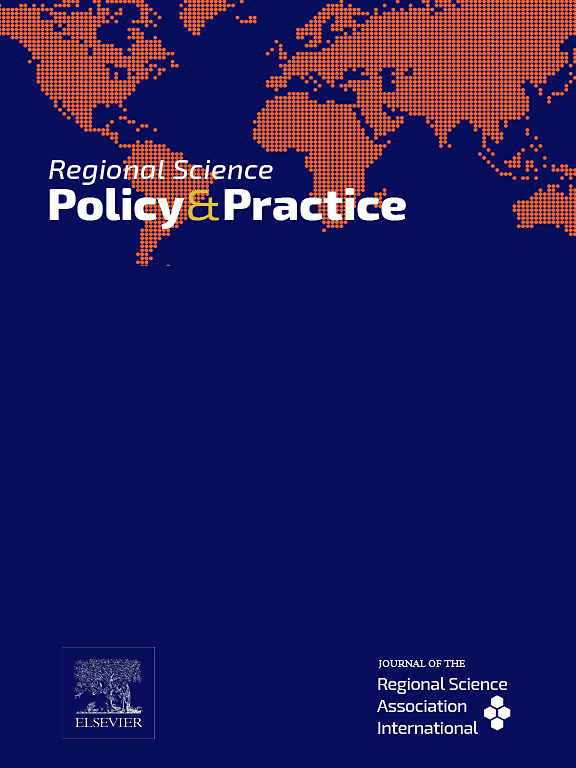
Call for Papers for Special Issue in Regional Science Policy & Practice (RSPP)

Title: "Impacts of War in Ukraine: Perspectives and Challenges"

Guest Editor: Dr Kateryna Zabarina - University of Warsaw; This email address is being protected from spambots. You need JavaScript enabled to view it.

This special issue aims to collect articles on perspectives and challenges coming from ongoing war. Unlike the previous RSPP Special Issue "Ukraine: geopolitical realities and regional development perspectives" dedicated to understanding a way Ukraine went starting in 1991 without focusing on full-scale war, this issue will address the economic, social, environmental, psychological and geopolitical impacts, providing a platform for in-depth analysis and discussion. By featuring diverse perspectives and rigorous analyses, it aims to foster a deeper understanding of the multifacetedness of the war phenomena and provide a foundation for building more resilient and peaceful futures.

Special issue information:

The war in Ukraine has led to various consequences, reshaping all aspects of everyday life. This special issue aims to explore these changes, bringing together diverse disciplinary perspectives to deepen our understanding of the conflict's far-reaching effects. Contributions will address themes such as displacement and resilience, economic disruptions, social transformations, ecological damage, and shifts in international relations, with a particular attention to spatial dimension.

By examining these aspects, this issue seeks not only to provide critical analyses but also to offer valuable guidance for policymakers, academics, and practitioners in crafting strategies for rebuilding, reconciliation, and future conflict prevention.

Keywords: Impact of war, challenges and perspectives, multidisciplinary perspective.

Manuscript submission information:

We kindly invite contributions on topics related (but not limited) to:

  • Challenges and perspectives for various industries
  • Social and Cultural aspects (i.e. education, migration, culture etc.)
  • Effects of war on environment
  • Geopolitical implications
  • Psychological issues
  • Policy evaluation (i.e. challenges and possibilities of joining the EU)

All manuscripts will be submitted via the Regional Science Policy & Practice online submission system (https://www.editorialmanager.com/rspp/). Authors should indicate in the cover letter that the paper is submitted for consideration for publication in this special issue “Impacts of War in Ukraine: Perspectives and Challenges”, otherwise, your submission will be handled as a regular manuscript.

Submissions extended deadline: March 31st, 2026

Related literature:

Maruniak, E., Lisovskyi, S., & Rudenko, L. (2023). The spatial dimension of the war effects in Ukraine: An agenda for country recovery. Europa XXI44.

Biagini, E. (1993). Spatial dimensions of conflict. GeoJournal31, 119-128.

Hinterleitner, M., & Sager, F. (2022). Policy’s role in democratic conflict management. Policy Sciences55(2), 239-254.

Bjorkdahl, A., & Buckley-Zistel, S. (Eds.). (2016). Spatialising peace and conflict: Mapping the production of places, sites and scales of violence. Springer.


Dear members of the Regional Science Association International (RSAI),

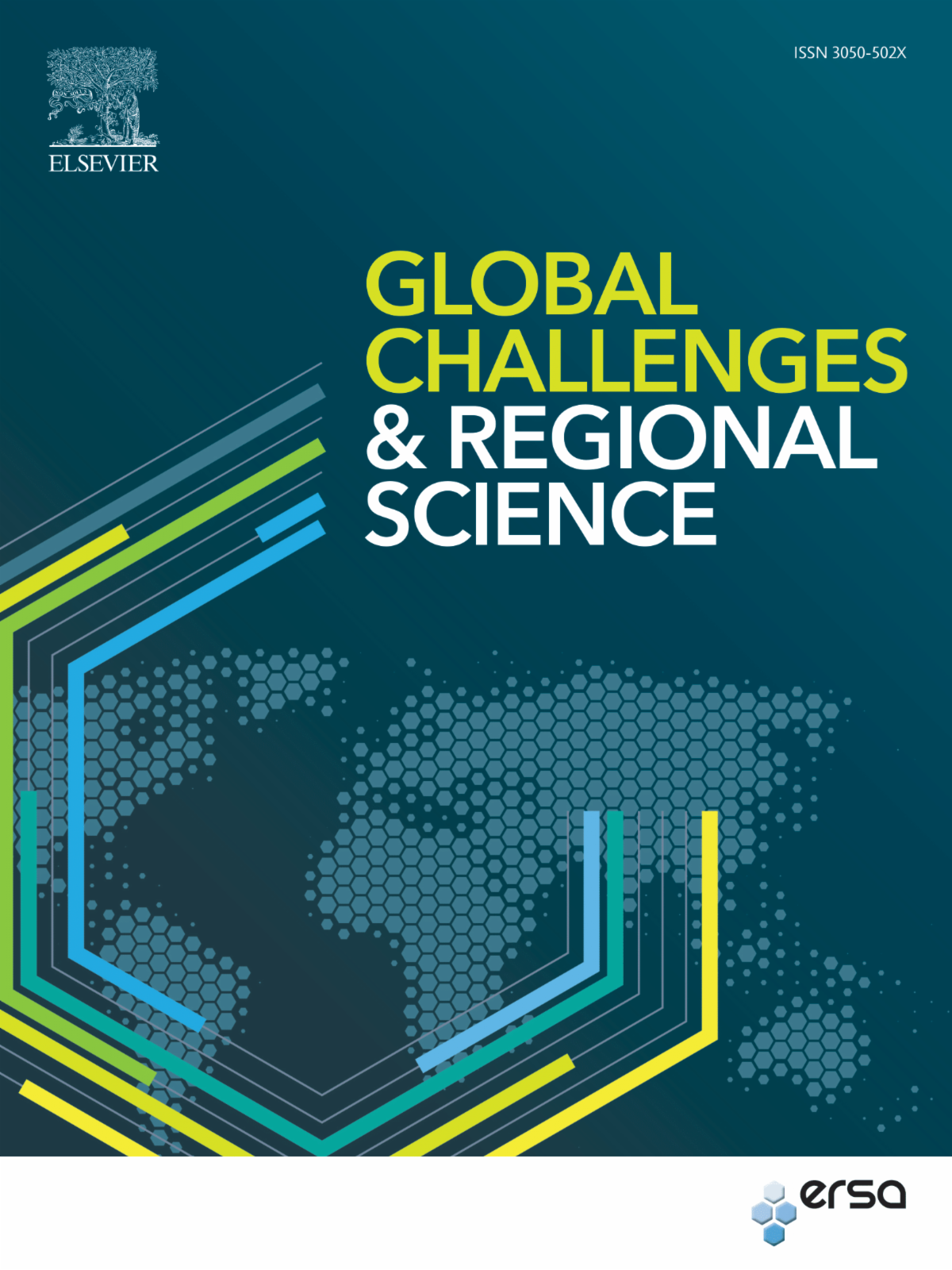
As Editor-in-Chief of Global Challenges and Regional Science (GCRS) - the newest academic initiative of the European Regional Science Association (ERSA), published by Elsevier - I am writing to share some exciting updates regarding the journal’s trajectory and to remind you of an upcoming submission milestone.

Exceptional Early Impact

Since our launch in early 2025, GCRS has achieved remarkable academic standards. Our latest internal metrics indicate that the journal is already performing at levels comparable to those of long-established and highly regarded titles in our field, such as Papers in Regional Science (PiRS) and Regional Science Policy and Practice (RSPP).

As shown in the table below, our Immediacy Index of 1.53 currently leads this group, reflecting the rapid resonance and timeliness of the research we are publishing.

2025 Metric


GCRS


PiRS


RSPP

Immediacy Index


1.53


1.43


1.51

Submission to Acceptance


100 days


181 days


213 days

GCRS provides a significantly faster editorial process, with an average of 100 days from submission to acceptance, ensuring that your research reaches the global community promptly.

Furthermore, based on our strong initial performance indicators and rigorous peer-review standards, we are on a firm path toward indexation. We anticipate that Global Challenges and Regional Science will be included in Scopus within two years of its launch. This achievement will further solidify the journal's visibility and ensure that your research achieves the international recognition it deserves.

Distinguished Contributors

We are proud to feature works from some of the most prominent voices in Regional Science. Our most downloaded papers include contributions from esteemed scholars such as:

The research published in our initial volumes reflects the multidisciplinary nature of our mission, focusing on key Global Challenges faced by Regional Science, including:

  • Regional Policy & Global Outreach: Influencing policy to enhance collective responses to global disparities and social justice.
  • Regional Innovation & Resilience: Exploring innovation systems, IPR dynamics, and firm-level resilience.
  • Urban Dynamics & Spatial Analytics: Utilizing big data and high-resolution geographic analysis to track regional growth.
  • Sustainability & Environment: Analyzing the environmental Kuznets curve and the impact of climate change through spatial lenses.

Last Chance for APC Waivers: May 31st

To support the scholarly dialogue on pressing global issues, we are currently offering a 100% discount on Article Publishing Charges (APC).

Please note that this full waiver is valid only for articles submitted by May 31, 2026. After this date, the standard APC of USD 1,800 will apply. We encourage you to take advantage of this opportunity to publish your high-quality, rigorous research in a high-impact, Open Access format at no cost.

You can find the full submission guidelines and our Open Access policy on our website: ? GCRS Submission Portal on ScienceDirect

We look forward to receiving your innovative work and continuing to build GCRS as a cornerstone of our discipline.

Warm regards,

Vicente Royuela
Editor-in-Chief, Global Challenges and Regional Science
Universitat de Barcelona & ERSA
This email address is being protected from spambots. You need JavaScript enabled to view it.
 

The most downladed articles in the last 90 days are

An analysis of agricultural crop residue burning and urban air pollution in New Delhi, India, by Amitrajeet A. Batabyal, Hamid Beladi. September 2025

Measuring regional economic transformation: Which European regions are leading the competitiveness and sustainability challenge? Anabela Santos, Andrea Conte. December 2025

Housing deprivation in rapidly urbanizing regions: evidence from functional urban areas in Sub-Saharan Africa, South Asia, and Southeast Asia. Danny Granda, ... Jorge Urrutia-Mosquera. December 2025

A second spatial autocorrelation mechanism: Geographic hierarchies and urban systems. Daniel A. Griffith, ... Arturo Kerlim Villarino. December 2025

Place-based policies – How to do them and why. Jens Suedekum. March 2025

Navigating coastal resilience: Exploring population density and coastal distance dynamics along the gold coast. James Murphy, ... Daniel Arribas-Bel. September 2025

The great challenge for local labour markets. Lovely and lousy jobs in the digital era. Roberta Capello, ... Camilla Lenzi. September 2025

Deluge of costs: Navigating the economic impacts of flooding in Egyptian port cities. Eduardo A. Haddad, ... Hogeun Park. September 2025


Dear RSAI members,

I hope this email finds you well.

The RSAI Fellows Award is given every year to a "distinguished scholars with a proven and recognized research record in the field of regional science during a considerable part of their scientific career".

If you have someone in mind that suits this description, please do not hesitate in nominating him/her to this Award, as ANY RSAI member in good standing can do it (except the RSAI Fellows themselves).

A standard Nomination Form for RSAI Fellows should include the following items:

  • Factual bio-data on candidate, including a proof for RSAI membership
  • Professional career of candidate (max. 100 words)
  • Substantive contribution to regional science (max. 200 words)
  • Path-breaking publications on regional science (max. 5)
  • Signs of international scientific recognition (max. 50 words)
  • Reasons for nominating the candidate (max. 50 words)

The deadline for this year's nominations is set to Apr. 15th.

For more detailed information, please visit: https://www.regionalscience.org/index.php/awards/rsai-fellows.html,

Thank you all in advance for your attention

Kind regards, 

Dr Ana Viñuela
RSAI Executive Director
Associate Professor, Applied Economics Department
REGIOlab, University of Oviedo,  Spain
European Project EXIT (https://www.exit-project.eu/)
 

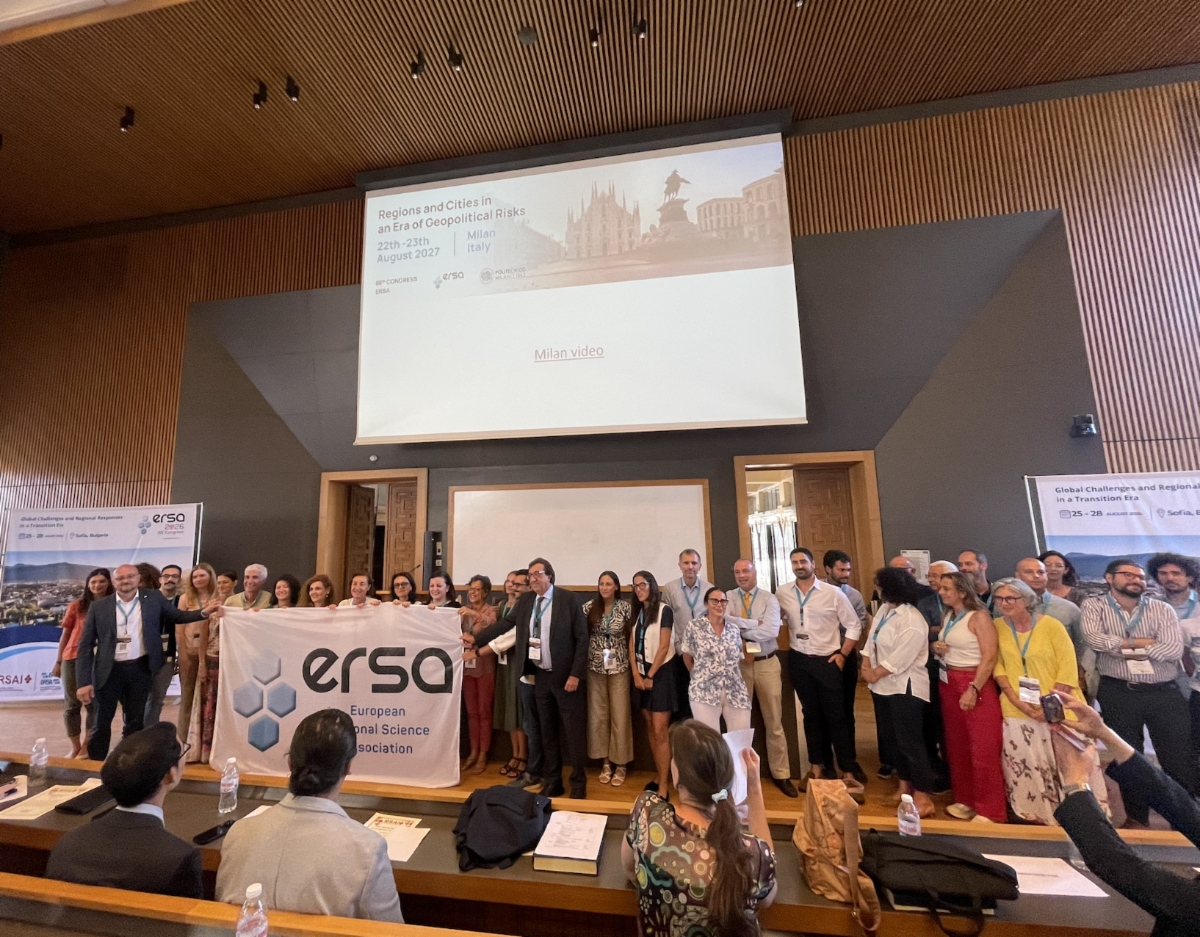
#ERSA2026 Congress

There are only 2 days left to submit your abstract for the ERSA Congress 2026

Deadline: 20 February 2026

The ERSA Congress has come back again with IN-PERSON Participation only

Present your research in Sofia

25-28 August 2026

ERSA Congress is the largest academic event for regional scientists worldwide and is a unique platform to share your findings, get valuable feedback, learn and network

If you are planning to participate, now is the time to finalise and submit your proposal.

Don't miss this chance to be part of it!

#ERSA2026 Summer School

Apply for ERSA Summer School


We are looking for smart young researchers

willing to learn, present their research and get precious feedback from outstanding professors and experts in the field.

Theme:

Circular Cities, Clusters, Ecosystems and Regions:

Public Policies for Sustainable Regional Development

21-26 June 2026

Places are limited to 25 Participants!

Deadline: 28 March 2026

Apply for ERSA Summer School

The Summer School will be held in Covilhã, a city that has been part of the UNESCO Creative Cities Network since 2021, offering a dynamic and inspiring academic environment.

A very attractive Programme


Join us and start the conversation

#ERSA2026

#ERSASummerSchool2026

Facebook Twitter  Instagram  


ERSA | tbd | This email address is being protected from spambots. You need JavaScript enabled to view it., IT


#ERSA2026 Congress

There are only 4 days left to submit your abstract for the ERSA Congress 2026

Deadline: 20 February 2026


The ERSA Congress has come back again with IN-PERSON Participation only

Present your research in Sofia

25-28 August 2026

ERSA Congress is the largest academic event for regional scientists worldwide and is a unique platform to share your findings, get valuable feedback, learn and network

If you are planning to participate, now is the time to finalise and submit your proposal.

Don't miss this chance to be part of it!


Join us and start the conversation

#ERSA2026

Facebook Twitter  Instagram  

REGIONAL STATISTICS, 2026, VOL 16, No 1.

STUDIES

Dear Readers,

We are pleased to say that the 1/2026 issue of Regional Statistics has been published and available online!

CONTENT

Gergely Lülök – Imre Dobos – Zoltán Sebestyén: Statistics on the use of AI technologies in the member states of the EU

https://www.ksh.hu/statszemle_archive/regstat/2026/2026_01/rs160101.pdf

Zsolt János Viharos – Anh Tuan Hoang – Botond Géza Kálmán – Endre Béla Huff – Zoltán Zéman: AI-powered insights on global corruption: a multi-view analysis

https://www.ksh.hu/statszemle_archive/regstat/2026/2026_01/rs160102.pdf

Gabriella Szajkó: Bioenergy expansion amidst uncertain data – lessons of imbalance from the V4 countries

https://www.ksh.hu/statszemle_archive/regstat/2026/2026_01/rs160103.pdf

Luigi Capoani – Csaba Lakócai: Spatial dynamics of competitiveness: a comparative analysis of the Blue Banana and emerging EU regions

https://www.ksh.hu/statszemle_archive/regstat/2026/2026_01/rs160104.pdf

József Poór – Szonja Jenei – Szilvia Módosné Szalai – Marzena Stor – Łukasz Haromszeki – Imrich Antalik – Zdeněk Caha: Gender-specific obstacles and employment disparities in the V4 countries: a study on finding the ideal workplace

https://www.ksh.hu/statszemle_archive/regstat/2026/2026_01/rs160105.pdf

Róbert Győri – György Mikle: Changing and continuous patterns of regional development disparities in Hungary, 1910–2022

https://www.ksh.hu/statszemle_archive/regstat/2026/2026_01/rs160106.pdf

Nguyen Thi My Linh – Ngo Thai Hung – Nguyen Minh Phuc: Nexus between public debt and economic growth in BRICS countries: new evidence from quantile and frequency approaches

https://www.ksh.hu/statszemle_archive/regstat/2026/2026_01/rs160107.pdf

Erika Jáki – Béla Kádár – Zoltán Pollák: Regional patterns in Covid-19 preparedness, impact, and economic response across the EU27

https://www.ksh.hu/statszemle_archive/regstat/2026/2026_01/rs160108.pdf


Join us to our social networking sites:

https://www.facebook.com/RegionalStatistics

https://ksh.academia.edu/RegionalStatistics

The 29th Pacific Conference of the RSAI (PRSCO 2026)
RMIT University, Melbourne, Australia
1-3 December 2026

PROSPEROUS FUTURES? CONTESTED KNOWLEDGE FOR SUSTAINABLE REGIONS

The Pacific Regional Science Conference Organisation (PRSCO) is one of the four supra-regional associations of RSAI (Regional Science Association International) which is founded in 1954. This year, Australia New Zealand Regional Science Association International (ANZRSAI) jointly with PRSCO is organising 29th PRSCO Conference at RMIT University, Melbourne. PRSCO welcomes proposals for contributed papers, for themed panels, or for special sessions, on any topic related to regions.

The first call of papers can be downloaded here.

To register, please go to here.

The travel and accommodation can be found in here.

More information: https://www.anzrsai.org/conference/conference-2026/


Investigaciones Regionales - Journal of Regional Research has published the 64rd Issue, the first volume corresponding to 2026.

Below you will find the summaries of the papers published in this volume, which can be accessed at https://investigacionesregionales.org/en/revista/numero-64/

We invite authors to submit papers at https://investigacionesregionales.org/en/envio-de-articulos/submission-of-papers-and-others-contributions/

Issue 64

Articles

Rafael González-Val, Fernando Sanz-Gracia

A test of the relationship between the Pareto exponent and sample size

This paper uses un-truncated city population data from three countries—the United States, Spain and Italy—to empirically test Proposition 1 put forth by Eeckhout (2004 American Economic Review, 94: 1429–1451). Eeckhout’s hypothesis was that the estimate of the Pareto exponent in a standard Zipf regression decreases with sample size, if the underlying city size distribution is lognormal. Using rolling sample regressions, we find that this proposition is only valid once we enter the lognormal body of the distribution; for the Pareto-distributed upper-tail, the estimated exponent does not vary with sample size.

Keywords: City size distribution; Zipf’s law; Pareto exponent; Pareto distribution; lognormal distribution; rolling sample regressions

Alberto Vaquero García, Santiago Lago Peñas, María Cadaval Sampedro, Patricio Sánchez Fernández

Regional Investment Dynamics: A Comparative Study of the Autonomous Communities in Spain

This paper aims to provide a comprehensive description of the evolution of public investment by the Autonomous Communities in Spain from 1984 to 2021, to identify patterns in investment policies and explain their underlying causes. Additionally, the paper evaluates the impact of savings, transfers, and deficits on public investment. The findings reveal distinct patterns in the level and dynamics of these variables across regions. Priority was given to essential welfare expenditures during the Great Recession, while the post-recession recovery displayed varied regional behaviors. The positive impact of European and national funds, such as the Interterritorial Compensation Fund, effectively revitalized investment and savings, which emerged as a key differentiating factor in chartered communities.

Keywords: Public investment; capital transfers; indebtedness; Autonomous Communities

María Gema Flores Polán, Gemma Fuentes Calle, Luís Fernando De la Macorra Cano

Convergence in the Spanish and Portuguese NUTS 3 regions: an analysis of the period 2000-2019

The objective of this paper is to examine the convergence of economic activity between the various NUTS 3 regions of the Iberian Peninsula over the period 2000-2019. An analysis of the GDP (PPS) per capita of Spanish and Portuguese provinces was conducted with the help of different usual statistical and econometric methods of σ, β and γ. This was done to confirm the existence or non-existence of economic convergence in the period under analysis. The results revealed the existence of economic convergence between the Portuguese and Spanish provinces. In addition, they showed that more than half of the territory analysed was characterised by a scenario of poverty.

Keywords: Economic convergence; GDP; Spain; Portugal

Francisco Morillas-Jurado, Paz Rico-Belda, Bernardí Cabrer-Borrás

Does the location of company headquarters affect regional trade flows? Evidence from Spanish regions

This paper examines trade flows between Spanish regions to assess whether the location of company headquarters affects regional trade flows. To achieve this, various gravity models are used to assess whether economic and geographical factors influence the intensity of trade flows. This study utilises European regional data, provided by the EUREGIO database, focusing specifically on Spanish regions. The results show that factors such as inertia, territorial contiguity, economic attraction between regions, and the location of company headquarters play a significant role in determining the intensity of GVA trade flows between Spanish regions.

Keywords: Trade flows; Input-Output table; gross value added; gravity model; spatial autocorrelation and distance

Jordi Suriñach, Esther Vayá, Jordi López-Tamayo, Joaquim Murillo

Regional economic impact of Latin American Universities. A comparative analysis

The article represents the first contribution in which the economic impact of a group of nine Latin American universities is estimated, following a demand-based approach and a homogeneous methodology. The analyzed universities have different profiles depending on their ownership, size, age, or geographic location. Using the input-output methodology, the impacts derived from the expenditures and investments made by both the universities and their related agents are estimated. The results show significant impacts (up to 4% of the regional GDP, depending on the case), which extend across the entire national territory and all economic sectors. The study demonstrates that the economic and social impact is highly relevant, providing a substantial return, overall in universities with a high level of R+D+I activities.

Keywords: University economic impact; regional and local development; Input-output methodology; Latin America

Rodrigo Pérez Silva

Local development and interregional migration of highly skilled workers. The case of Chile

The ability of local territories to create and attract human capital is key in generating progress at the local level. However, skilled workers not only tend to stem from certain regions, but to be attracted to them. This study analyzes interregional migratory movements in Chile, identifying differentials in local economic development as a factor that promotes selective migration of workers. The results indicate that regions with high levels of relative development attract more qualified migrants and expel the less qualified, thus reinforcing the initial concentration of human capital.

Keywords: Local economic development; interregional migration; skilled workers

Viviana Carriel, César Andrés Mendoza, Rodrigo Mendieta, Sofía Bravo

Job quality in the shadow of informality: the mediating role of education. A regional analysis in Ecuador between 2014 to 2019

This paper investigates the relationship between informality and job quality in Ecuador, emphasizing the role of education as a mediating factor. Utilizing data from the National Survey of Employment, Unemployment, and Underemployment from 2014 to 2019, the study employs an Employment Quality Index to assess job quality. Through a detailed empirical strategy incorporating pooled ordinary least squares regressions, panel data analyses, and spatial models, the research unveils a negative impact of informality in employment quality. However, the findings indicate that education does not significantly influence this relationship at the regional level. These results highlight the necessity for targeted policy interventions that address the structural issues in the labor market.

Keywords: Employment quality index; informality; education; Ecuador

Carolina Guevara Rosero, Miguel Flores, Michelle Llumiquinga, Melany Tulcán

Spatial patterns of crime in Ecuador: analyzing the impact of judicial systems and geographic elements

This study investigates the spatial patterns of crime in Ecuador and their driving factors, paying special attention to the judicial system’s impact. Drawing on data from 218 cantons between 2015 and 2021, we applied exploratory spatial data analysis and spatial econometric models for cross section data and panel data. Our analysis revealed discernible clusters of both high and low crime rates, as well as isolated areas of crime (islands of crime) and safety (islands of non-crime). The findings offer a detailed overview of the crime situation in Ecuador and emphasize the significance of geographic elements in formulating effective crime prevention measures. The analysis also identifies the shift in crime dynamics over time, indicating that cantons typically experiencing low crime rates can evolve into higher crime areas, hinting at a contagion effect within spatial clusters. The study further underscores the critical influence of the judicial system on crime prevalence, where systemic inefficiencies such as case backlogs and a high proportion of unsentenced inmates are associated with rising crime. For policymakers, these insights underscore the necessity of tailoring interventions to the specific contexts and dynamics of each region, considering both the local conditions and the broader surrounding crime environment.

Keywords: Crime; spatial; cluster; Latin America; judicial

Juan Gabriel Brida, Pablo Juan Cárdenas-García, María Leivy Mejía-Alzate, Verónica Segarra

An empirical examination of the dynamics of tourism, growth, and economic development at a regional level. The colombian departments

Since the normalization of tourism in Colombia resulting from improved security and the pacification of various regions of the country, increased attention has been paid to the key role of tourism in regional economic development. The objective of this paper is to analyze the relationship between the tourism sector and economic development in Colombia. To examine the dynamic relationship existing between international tourism and economic development, the 33 departments of Colombia are analyzed between 2012 and 2021. The empirical analysis is conducted using non-parametric tools, derived from symbolic time series analysis, based on the notion of economic regime and clustering techniques. This offers a contribution in two aspects: on the one hand, a novel methodology is applied, and, on the other hand, regional-level analysis is performed. A limited mobility of the departments between the different regimes has been observed during this period, indicating the stability of the variables analyzed. The results of the study suggest that the relationship between tourism and economic development differs in the different groups of departments identified, offering evidence of differences within the country. It should be noted that the group of departments with the highest level of tourism displays a high level of economic development and growth.

Keywords: Tourism; economic growth; economic development; regional analysis; dynamic regime

Lejla Karamujic

Country’s governance quality impact on cloud computing adoption in the EU enterprises

Cloud computing is widely recognised as a key technology that enables digitalisation, fuelling the digital economy growth. Using World Bank Governance Indicators, in this paper we examine how country’s quality of governance (or good governance) impacts the use of cloud computing in the enterprises in the EU, hence affects digitalisation of the EU. In an empirical examination of 27 EU countries over a period from 2014 to 2021, it was found that good governance positively affects cloud computing adoption in the EU enterprises. In support of the institutional theory, we show that improving country’s governance quality is an important step in accelerating cloud computing adoption by the EU enterprises, the finding providing an important input to the EU government in their execution of the Industrial Strategy 2030, in which digitalisation and cloud computing adoption play an important role. Businesses operating in the EU countries with higher quality of governance are more likely to implement cloud computing in their operations, a cost and performance benefiting technology, a valuable insight to the EU enterprises, which gain direct benefits from increased cloud computing adoption in their businesses.

Keywords: Institutions; cloud computing adoption; digitalisation; good governance; country’s governance quality; EU (Europe); World Bank governance indicators; quality of government index

Page 1 of 266

About Us

The Regional Science Association International (RSAI), founded in 1954, is an international community of scholars interested in the regional impacts of national or global processes of economic and social change.

Get In Touch

Regional Science Association International
University of Azores, Oficce 155-156, Rua Capitão João D'Ávila, 9700-042 Angra do Heroísmo, Azores, Portugal

Hit Counter

Today6448
Yesterday11688
This week29227
This month29227
Total52981899

Tuesday, 03 March 2026

Search